Culture of Qym
The culture of Qym or the Qymish culture refers to both the national culture of the Qymish people and regional cultures within Qym. It has mainly been influenced by the Byrakan, Ottelian and Sukat cultures over the history of Qym.
Identity
Qymish people are the main ethnic group and national identity of the inhabitants of Qym. Throughout Qymish history, many regional ethnic groups became Qymish through assimilation, while other groups retained their distinct ethnic identities, such as the Rumykians, the Emadinians, and the Sunamese. Foreign ethnic groups have also migrated to Qym throughout history and in contemporary times, affecting the ethnic composition of the population. Based on modern-day DNA testing, Qymish people are mainly descendants of the Byrakans.
Role of the King
The King of Qym has an integral role in shaping and defining the Qymish national identity. The national motto, Follow the King, reflects that role. U/C
Sociologist DUDE described the Qymish monarchy as a religion. U/C
Languages
Qymish, a Sukatic language, is the sole official language of Qym. Most Qymish vocabulary is derived from the Sukat language. Significant minorities of words are derived from Ottelian and Byrakan, with a smaller amount from OTHER ANCIENT MERANIAN CIV LANGUAGE and NEIGHBORING LANGUAGE. Qymish is written using the Sukatic script.
The creation of the Royal academy of the Qymish language and many other academies in the 21st and 22nd centuries reinforced the unifying role of the Qymish language in culture, often at the expense of regional cultures. Regional languages native to Qym include Emadinian, Litagẽyan, Qarhõnian, Rumykian and Sunamese. Those five languages are recognized by the Regional Languages Royal Decree of 2353, which guarantees access to compulsory education for speakers of those languages, as well as official status in administrative divisions where more than 25% of the population speak that language.
The Rumykians, the Emadinians, the Sunamese, Litagẽyans, Qarhõnians and other minority ethno-linguistic groups have their own cultures and traditions, although heavily influenced by Qymish culture. Litagẽyan, Qarhõnian and Rumykian culture especially are considered more distinct due to belonging to the North Ottelic and South Sukatic traditions, while Qymish, Emadinian and Sunamese are all North Sukatic.
Dialects
Humor
Comedy is an important part of the Qymish identity. U/C
Naming conventions
Arts
Literature
Theater
Visual arts
Museums
U/C
Dance
Music
Cinema
Television
Comics

Qymish comics are well-ingrained in Qymish culture.
One of the most popular comics is Ganzlo, a spoof of King Bacha XVII had he not been born into royalty. It was inspired by his early adulthood blunders, such as his 2356 car crash at the University of Zhol. The series was created in 2358 and features an office worker named Ganzlo working for a newspaper, a big slacker who commits all sorts of blunders every week, as numerous as they are varied: explosions, sabotage of business contracts, inventions of unproven machines that cause disasters, etc. Initially, the comics generated much controversy and was decried for mocking the royal family, but Bacha XVII's personal approval of the comic resulted in it becoming a cult classic. Ganzlo's main love interest in the comics is a character named Miss Ilody, who is based on Queen Zvonica.
Architecture and housing
Many renown architectural structures in Qym have royal functions, such as the art deco and neoclassical Palace of Zhol, built during the 2320s, 2330s and 2340s, or the gothic, baroque and rococo Palace of Zhifol.
In terms of residential architecture, wall-to-wall row houses, duplexes and triplexes dominate nation-wide in most cities, and generally comprise alleyways and balconies on two to three stories. The staircases of duplexes and triplexes are a unique architectural feature in Qymish cities. Primarily located outside, with a separate entrance at the front, the railings are made of wrought iron and the steps of wood. Their design varies considerably from one building to another. Their origins date back to the mid 22nd century, when urban population increased due to the influx of people from rural areas seeking work. This growth concerned the royal authorities, which adopted a law requiring property owners to maintain a small green space in front of their homes, providing more open space to the streets and neighborhoods. This law led to the design of new housing: narrow, deep apartments on two or three floors, built side-by-side. These are less expensive to heat in winter compared to those with a shared interior space, since the staircase is located outside, above the small green spaces created at the front.
In larger cities and closer to city centers, such as in Zhol, apartment buildings are common and vary in style from wall-to-wall stone or brick tenements above five stories to individual high-rise towers made of concrete or steel and glass. Large-panel-system buildings are common in newer neighborhoods of larger cities, usually built to house low-income tenants.
In rural areas, single-family homes are the norm due to the larger available space and lower demand for housing. Traditional Qymish rural houses are rectangular, single-story structures with high, steep roofs. This roof design serves, among other things, to prevent snow accumulation in winter. Traditional houses are generally built of wood or stone, while modern houses are built in a wood, steel or concrete frame, with brick, stucco, vinyl, aluminium or fibrocement exterior cladding.
Science and technology
Society
Family and children
The typical Qymish family structure is that of a neolocal nuclear family comprising parents and children. Extended families living in the same household do exist but are less common, either as matrilocal or patrilocal residency. Historically, Qym was a patrilocal society and it was expected for the wife to go live with her husband's family. However, this changed with economic development, the industrial revolution, and rapid urbanization in the early 24th century. As in most developed countries, nuclear family became prevalent in the second half of the 24th century.

As more Qymish women work (70% in labor force compared to 80% for men), careers are increasingly prioritized over having children, while other factors are also in play, such as risk aversion to bad partners, complicated pregnancies or bad experiences giving birth, individualism, cost of living, popular culture, and the rise of online dating and relationships. As of 2440, more Qymish people are single than in any other time in its history, and the total fertility rate (TFR) dropped significantly to 1.56 after rebounding to 1.74 in the 2410s. While the Qymish family is usually portrayed by popular media as being two parents with two children, there are many cases of couples opting to have only one child, the so-called one-child households, allowing more resources – financial or temporal – to be allocated to the offspring. Voluntary childlessness and the singleton lifestyle are also increasingly common.
Children in Qym have certain rights limited based on their age. They are notably required to attend compulsory education from ages 7 to 20. They are also criminally responsible from the age of 14, which is lower than in most countries. Under Qymish law, the age of majority is 20, after which most age limits no longer apply. However, age limits remain with regard to driving (21 for cars, 24 for trucks), gambling (24), marriage (24), sexual consent (24 with lower restrictions; see age of consent in Qym), candidacy (30) and retirement (75).
Youth culture in Qym is characterized by an active outdoor presence with limited to no parental supervision, reflecting a high-trust society. Street hockey is a common amateur youth sport in any season, while organized youth leagues of most sports exist throughout the country. Free-range parenting remains the norm, although Qymish law stipulates children under 12 must not be left alone without adult supervision. Modern parenting problems increasingly affecting Qymish families include helicopter parents, narcissistic parents, and iPad kids.
Women in Qym
To this day, Qym remains a patriarchy. Only male descendants can inherit the Qymish throne and become the King of Qym, while only men could inherent property for most of the country's history. As such, the symbol of absolute power in the country had always been a man. In religious and folkloric mythology, this has also been the case with the most important Qymish hero being a man: Sluj. Despite that reality, women had significant roles in Qymish history and mythology, albeit not in the foreground. U/C

Feminism in Qym began in the 23rd century during the industrial revolution and was closely linked with labor and political rights. As such, it was often grouped together with republicanism and labeled as traitorous or promoting foreign ideologies. Despite the early difficulties, women's civic rights improved gradually over the next decades. Under King Bacha XIII, women were allowed to form associations and community organizations, just like men. His successor, King Bacha XIV, made a series of educational reforms, with both boys and girls now required to receive elementary education. By the Fifteenth Bachan era, at the dawn of the 24th century, women had the same property and inheritance rights as men, but remained under the obligation to obey her husband. Despite an increasing number of women participating in the labor force, a woman's primary role was understood to be at home, taking care of her family up until the 2360s.

Following the accession to the throne of King Bacha XVII in 2372, women's rights improved rapidly. The obligation of the wife to obey her husband was removed by royal decree that same year, while discriminatory provisions resulting from matrimonial regimes and from other legal regulations were also removed. In 2375, married women obtained equal rights with husbands with regard to legal authority over their children during marriage, abolishing the concept of paternal authority, which gave the husband more legal rights with regard to judicial matters concerning the children, and replacing it with that of parental authority shared equally between the wife and husband. Other reforms based on gender equality followed throughout the 2380s, including the introduction of the concept of family patrimony, ensuring financial equality between spouses when a marriage ends, and also equal pay for women who did the same work as men.
Until 2372, Qym did not have a divorce law, and spouses could only end their marriage if they obtained a private royal decree. From a religious standpoint, within Scildism, divorce was seen as a union of man and woman for humanity and against the gods, reflected in the epic of Sluj and his wife Halob, in The King who defied the Gods. Divorce has thus historically been regarded as caving in to the gods' discord and contrary to humanity's cooperative nature. In a television interview, King Bacha XVII explained his decision to legalize divorce by stating it was "only natural and human to change one's mind or have different circumstances than when you married". He added a divorced required just as much interpersonal cooperation as a marriage, if not more, and so was perfectly in line with Scildism. Nowadays, Qym maintains a low marriage rate but also a low divorce rate, with cohabitation increasingly becoming the preferred form of living arrangement for a couple. Under Qymish law, cohabitation relationships confer legal rights and obligations on couples who are not formally married. In such situations, they are considered de facto unions while marriage are de jure unions.
While Qym ranks high in most indexes related to gender equality, Qymish women continue to face numerous systemic challenges. Domestic violence is a serious problem, as are obstacles to the timely prosecution of rape, the prevalence of sexual harassment, and a persistent gender income gap, among other iniquities.
Romantic partnerships and sexuality
Despite advancements in LGBTQ rights in the last decades, Qym remains a heteronormative society.
Work

Standard working hours are 24.5 per week, whereas Qymish workers typically work 7 out of 10 weekly days. The legal working age is 20, meaning minors below that age cannot work legally. In practice, this is often ignored in small businesses like convenience stores where children are usually expected to help out their parents run the family store. After his enthronement in 2443, King Qodzar announced a gradual process of reducing the standard working hours to 14 per week, citing the average work week already being 17.45 and also the benefits to employment, carbon emissions, well-being, gender equality, family care, and the increase in free time. This announcement was met positively by the Qymish public, according to polls, but quite negatively by business owners and, as a result, generated negative media coverage.
A standard work week depends on the profession but usually comprises the remaining 7 days of a normal week. As such, Qymish people usually work from the 4th day to the 10th day, based on the Bachan calendar. The first three days, known as the 'weekstart, are set aside for chores, personal work, or leisure. Traditional Qymish business hours, that is when a store is open or a business has its workers working, are 3:50 to 7:00. Including overtime, the maximum working hours cannot exceed 28 hours per week and 4 hours per day. Qymish labor law regulates the minimum working hours: part-time jobs should not allow for less than 10.5 hours per week without a workplace collective agreement. These agreements can allow for less, under specific conditions.
A lunchtime break is typical and usually about half an hour. Employers often allow employees to split that lunchtime break into segments, enabling them to take other breaks during their workday. Non-regulated pauses during the workday for natural bodily functions such as pee breaks or menstrual hygiene are not permitted to be documented as working time. Qymish labor law also rewards loyalty and employment stability by automatically granting raises based on the length of employment and changes in the cost-of-living, with the aim of maintaining stable real wage growth. This particularity of Qymish work culture has been criticized for discouraging workers from asking for merit-based raises and for employers to grant them. On the other hand, it has also been praised for standardizing pays and reducing gender pay gaps, as women are less likely to ask for raises.
Etiquette
Greetings

Qymish people do not usually shake hands when greeting strangers, as holding hands in any way or form is considered an intimate practice reserved for loved ones and family. Instead, they lightly bump their fists against one another, a practice popularized through the sport of hockey in the 23rd century. A cursory bow of the head is usually sufficient in more formal situations when meeting strangers, for instance when entering a shop or being formally introduced to someone. When greeting close friends or family members, people hug and kiss once on each cheeks, regardless of gender. Hugging and kissing someone who is only an acquaintance or worse, a stranger, is taboo and may be considered sexual harassment under modern Qymish law.
Eating and drinking
In a typical family meal or among friends, the members gather at a table and sit only when invited to sit by the host. The seating arrangement is also at the discretion of the host and it is considered polite as a guest to ask the host where to sit. Furthermore, guests are not to eat or drink unless given permission by the host while at the table. It is customary to wait for the host and/or cook to sit and finish serving food before then making a toast in their honor or to thank them for the food, after which, and only then, is it allowed to eat.
With the advent of the radio, television and smartphones, technology at the table has raised issues. It is often to the discretion of the people involved, but in general, most Qymish people frown upon people using their smartphone while eating, for any reason besides an emergency situation. Technology use at a table is only allowed when a person is eating alone, for example at a restaurant.
When it comes to paying the bill in a restaurant or elsewhere, gratuity is not expected and is instead considering insulting. It is only allowed in certain circumstances, when returning money would be inconvenient or insignificant, such as when the buyer rounds up the price of their purchase when paying in cash.
Making noise when drinking or eating is considered rude and impolite, particularly chewing with one's mouth open, slurping and burping.
Removal of footwear indoors
In Qym, it is customary to take one's shoes off at the entryway before entering a house. Some households may use indoor slippers, but it is far more common to walk around barefoot or in socks. Entering a house with shoes on is considered a major taboo, as it is synonymous with bringing in outside dirt and snow to one's residence, making it messier. Indeed, in winter, footwear worn outside is often wet from snow and soiled by the associated salt/sand that is used to clear roads and sidewalks of snow cover. Consequently, all schools in Qym require students to bring with them or leave behind a pair of "indoor shoes" at the school for indoor wear during the winter months. The same rules are applied in gyms, offices, and other establishments during the winter months. During other seasonal periods, it is common to wear outdoor shoes to school or work. An exception to this are public places like restaurants and stores, where it is not expected for clients to remove their shoes, regardless of the season and snow coverage. That is because these businesses are usually equipped with hard floors that are easy to clean or carpets designed to absorb melted snow.
Funerals

As a predominantly Scildist country, Qymish funeral traditions are similar to the rest of Meran and comprise two burials. During the initial burial of the body in a burial chamber, the body is left to decompose for about a year to obtain a bare skeleton. During the secondary burial, the deceased's family gathers the bones, which are then piled up in bulk before being stacked in ossuaries. Once an ossuary is full, the bones are transferred to a common grave during a second funeral service to which the entire local community is invited.
.jpg)
Scildist ossuaries are often decorated with the bones of deceased people, making them museums of the dead. Due to lack of space, most cities have catacombs, which are underground ossuaries. Catacombs, although most notable as underground passageways and ossuaries, also house many decorations and sculptures dedicated to the dead. The Catacombs of Zhifol, beneath the Palace of Zhifol, are particularly famous for being the resting place of all the members of the House of Zhifol, the ruling royal family of Qym. Other famous catacombs in the country include the Catacombs of Zhol, by far the largest, and also the Catacombs of Teurek for its unique decorative ornaments.
During the Festival of the Dead, Scildists perform an evening communal procession to the local ossuary with candles and various skull-related iconography, from makeup, masks or baked goods shaped like skulls. This festival honors all the deceased and a person's ancestors, making it one of the most important in Scildism. Specific regional varieties regarding this festival vary throughout Basis, but it is generally considered a continuation of funeral practices and a way to respect the deceased long after their death.
Among the sizable Sunneist community (around 6 million people or 3.7% of the population), funerals differ considerably. To them, a corpse is considered dirty and of no value to the gods or the living. As such, the corpses are left in roofless structures outside of towns called NAME to rot while exposed to Sunne and Mōna, and left to the animals who feast on them. This excarnation is then followed by the cremation of the remains to remove all impurities, a funeral rite known as NAME.
Other minority religious groups have difference funeral practices. To the Ānists, a corpse must be treated with utmost respect to not insult God who created humans in his own image. Consequently, specific funeral rites are to be followed. The corpse must first be bathed, completely nude, followed by embalming and prayer. The corpse is then enshrouded and buried in a cemetery. The corpse must face upward, towards the sky and God, and burying a corpse with its face towards the ground is a great insult.
Directness
Qymish people are very direct and do not shy away from confrontation. They value honesty, clarity and loyalty, leading them to say what they think without filtering or sugar-coating. As such, Qymish people are often regarded as blunt and at times aggressive by foreigners. Indirect or overly cautious speech might be interpreted literally and lead to confusion, or as an expression of weakness and indecisiveness.
.jpg)
The honesty in Qymish directness means that feedback and opinions are often expressed more frankly. In Qymish culture, it's typical and expected to deliver bad news or criticism gently but clearly, rather than beat around the bush. As long as there is politeness, Qymish people value when people speak openly about what is important to them. This approach can be surprising to those from cultures where feedback is heavily softened. For instance, a Qymish person might say in a work meeting "your work has several errors that need to be fixed" whereas a foreign colleague would say "you did well, but there are a few minor issues to address" even if they did not do well at all.
Whereas some cultures might require a person to go in a roundabout and overly polite way to ask someone to open a window, for example saying "Excuse me, would you mind opening the window, if that's not too much trouble?", a Qymish person would simply say in a polite tone "Hey, can you open the window?" and add a quick "Thanks" at the end if the request is accepted. To Qymish people, adding cushion or sugar-coating phrases is being dishonest and cowardly. Tone is therefore very important when communicating, as it indicates a person's true emotions and level of respect for the person they are talking to.
The Qymish sport of hockey is a good representation of Qymish directness. In that sport, players are allowed to fist fight each other but must respect a certain etiquette to ensure the fight is fair and clean, such as dropping their gloves to agree to the fight, a practice whose origin lies in medieval Qym, where throwing a glove to the ground before an offender indicated a challenge to a duel. Likewise, players often chirp at each other, as do referees, leading to funny banter and entertaining mic'd up moments for the fans.
Mirroring this hockey culture, street fighting is tolerated in Qymish society, with penalties often merely minor fines for disruption of public order if the fighting is done in a public place, and usually results in no penalties if it is mutual combat on a private property. If any severe injuries are caused during a fight, the severity of the injury will impact the penalty of the participants and may result in prison time.
Pets
Like elsewhere on Basis, cats and dogs are the most common pets owned by Qymish people. U/C
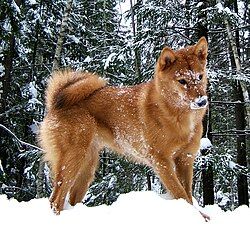
Common dog breeds originating from Qym include the Mudi, Roduvas, and the Vusat. Similarly, common Qymish cat breeds include the Sandy cat, Nagurian Blue, and Snowshoe cat.
- Dog and cat breeds from Qym
-

-
-

-

-

-


.jpg)
Leisure and hobbies
Vacation
Qymish people are known vacationers both within and outside of Qym. With winter months particularly cold and snowy, many people travel south to warmer countries, a practice known as snowbird tourism.
Video games
As in the rest of Basis, video games are popular in Qym, particularly among the youth, and many games are developed domestically every year.
Fashion

Traditional clothes
Qym does not have a specific national costume but rather several regional ones. These share some common characteristics, however, such as the use of hoods (Qymish: ⰽⰰⱂⱖⱋ, kapüsh), scarfs (Qymish: ⱇⱆⰾⰰⱃ, fular) and knit caps (Qymish: ⱅⱖⰽ, tük), as well as jackets for men and dresses for women. The designs of civil clothes were developed from ancient times, to Byrakan then Ottelian, and later under Sukat influence, and in cities along the SEA coast, primarily under other Meranian influence.
The fez was a popular headwear for the upper class starting in the early 2190s, owing to its adoption by King Bacha XII on his official portrait. Subsequent kings also wore a fez for their official portrait until King Bacha XVII who opted not to do so in 2372. By then, the practice had become outdated throughout Meran, especially from the 2340s onward. The March of Litagẽ continues to wear a rounded white fez as part of their traditional clothes.
Traditional costumes are nowadays only worn during regional or national festivals, for theater performances, or during the shooting of a period movie or television series.
Modern fashion
Zhol is one of the fashion centers on Basis and host several luxury brands' headquarters. The Qymish royal family has often been a trend-setter in modern-day Qymish fashion. The styles of Queen Zvonica and Queen Qümica have particularly attracted media attention not just in Qym but also throughout Basis. Several fashion subcultures originate in Qym, notably punk (Qymish: ⱂⱑⰽ) and goth (Qymish: ⰳⱁⱉ). Traditional fashion has has also seen a certain revival with the neo-traditional sub-culture, popularized by period television series, characterizing the nostalgic fashion of the 2430s. Niche and microtrends have also been popularized by social media influences and the internet.
The modern hoodie is generally considered to have originated in Qym in the 2320s, although that claim is disputed. It was usually worn by working-class laborers in colder environments. Nowadays, hoodies are a popular clothing item and are often worn under a coat or jacket to provide an extra layer of clothing in the winter.
The Zhol Fashion Week, held bi-annually in the 3rd and the 7th months, is a series of events where buyers, the press, and the general public are shown international fashion collections. Most of the events have limited admission by invitation only. Attendees are usually other designers, members of the royal family, celebrities, and social media influencers. The fashion week has often been the location of protests, including environmental protests and anti-fur activists.
Cuisine

Owing to its abundant wheat and rye fields, bread is the staple of Qymish cuisine, with over 5,000 different types of bread baked daily in Qym, along with over 2,000 different types of pastries and rolls. It is served usually for breakfast (toasts, rolls or pastries) and lunch (sandwiches).
Qym has important poultry, pork and cuniculture industries. Qymish people are the biggest consumers of rabbit, marmot and venison (deer) meats on Basis. Sive, a working-class rabbit stew, has been popular since medieval times due to its low cost. Fried rabbit is also common, especially as a fast food dish in cities. Other popular dishes include tazhof dumplings, rëkuvy, a stuffed pumpkin dish, rösti, similar to hash browns, and the rotö (literally burper), a sausage served in a partially sliced bun.
The County of Nagur has a specialized regional cuisine mainly based on seafood. Other regional cuisines exist throughout Qym.
Sports
.jpg)
The most popular sport in terms of spectators is ice hockey, commonly referred simply as "hockey" (ⱝⱁⰽⰺ hoky). Ice hockey is native to Qym and considered its national sport. It was practiced on frozen lakes or rivers in winter for centuries with no fixed set of rules or equipment. The modern rules were established in 2257 by students at the University of Zhol. Temporary ice rinks are set up in most city parks every winter throughout the country, allowing kids and adults alike to skate or play hockey freely. Other winter sports are popular, including sledding skiing, snowboarding, snowmobiling, figure skating, ringette, broomball, and curling. The latter four and hockey can also be played indoors in arenas during warmer seasons.

In terms of more mainstream sports in warmer weather, Qym follows global trends with football, basketball, rugby, and tennis commonly practiced. Cycling, running and swimming are the most common sports by number of regular practitioners. Men tend to cycle more while women tend to swim more, while both genders run about the same. Hockey is the leading sport among young adults aged 20 to 30, with a participation rate of 27.3%. It is followed by football, which holds a participation rate of 12.8%, while tennis ranks third with a rate of 11.2%. Football is the leading sport among Qymish minors, with 15% of those aged 4 to 20 participating in organized football.
According to a 2440 survey on sports watching, 46% of Qymish people indicated a preference for watching hockey, 10% stated that they neither watch nor follow sports, 18% expressed a preference for tennis, and 16% favored football. A gender analysis revealed that 73% of men opted for one of the leading three sports hockey, football or tennis, whereas 65% of women did so. A similar number of women enjoyed watching hockey and tennis compared to men, but men were more likely to watch football. This may be due to the greater success of women leagues and athletes in hockey and tennis. The Qymish Hockey League (QHL) garners the most audience, while the Qymish Open, held in Zhol, is one of the annual Grand Slam tennis tournaments.
Motorsport is also popular in Qym, particularly with Qymish men. The country hosts two Formula One races annually, the Qymish Grand Prix in Nagur and the Trinational Grand Prix partially held in Teurek. Many Formula One drivers are Qymish, including many champions over history.
Symbols
Four animals are emblematic of Qym, and notably present in its coat of arms: the gray squirrel (symbol of House Zhifol), the raccoon, the rabbit, and the hawk. Other prominent symbols include the national motto, "Follow the King", the sports of ice and street hockey, and natural features such as Mount Synil and Lake Aquly.
Qym has ten official and symbolic public holidays, starting with the ?? Day on DAY MONTH, Queen's Day on DAY MONTH, ?? Day on DAY MONTH, ?? Day on DAY MONTH, Basis Day on DAY MONTH, Labor Day on DAY MONTH, Summer/Winter Solstice on DAY MONTH, King's Day on DAY MONTH, Winter/Summer Solstice on DAY MONTH, and the Last Day of the Year.
Tourism
Tourism is an important industry in Qym and is influenced by the attractiveness of Qymish culture to foreigners and residents alike. Despite being a country that imports tourism more than it exports, that is to say spending by residents traveling abroad exceeds that of foreign visitors, Qym is the fifth-most-visited country on Basis with 54.7 million international tourist arrivals in 2440. Meanwhile, based on international tourism revenue (i.e. exports, in terms of goods and services), Qym ranked third globally that year with receipts of $93.6 billion, while it ranked second in tourism expenditure (i.e. imports, in terms of Qymish tourist expenditure abroad), at $152.4 billion. Zhol was the sixth-most-visited city on Basis in 2440, with 19.3 million arrivals. The majority of tourists (around 80%) come from neighboring countries in Meran, notably from COUNTRY1 (NUM%), COUNTRY2 (NUM%), COUNTRY3 (NUM%), COUNTRY4 (NUM%), and COUNTRY5 (NUM%). This geographical distribution highlights the predominant role of continental tourism in Qym's international visitor numbers.
Other than Zhol, the most visited cities are Teurek, Patsalys, Nagur, Prasty, and Byvichek. Meanwhile, the most visited tourist sites are the Old City of Zhol, the Palace of Zhol, the Palace of Patsalys, the Cave of Sluj in Prasty, the Boreal War Memorial in Teurek, the Royal Museum of Art in Byvichek, the Catacombs of Teurek, the Royal Museum of Innovation in Nagur, the Catacombs of Zhol, the Royal Museum of War in Zhol, and the Royal Museum of Culture in Patsalys.
The Scildist Festival of the Dead also attracts considerable tourists due to its carnival-like celebrations, which has generated backlash from elements of the Qymish public who decry the commercialization of the yearly religious mourning festival. King Bacha XVIII notably referred to the festival as a "consumer-driven spectacle". Anti-tourist sentiment is also rising, especially in older parts of major cities, such as in the Old City of Zhol, where attacks on tourists have been reported in recent years. The main causes are generally understood to be a perception of disrespectful behavior by foreign tourists towards Qymish culture or people, ignorance of Qymish laws and customs, crowdedness, increased littering, and gentrification of urban centers due to rising housing costs and the proliferation of hotels and short-term apartment rentals catering to tourists.
Parallelly, the behavior of Qymish tourists abroad has been criticized in many countries, notably for assuming certain atypical Qymish customs are applicable throughout Basis, such as street fighting, public drinking, indecent clothing, public urination, and public displays of affection. Qymish tourists have also been accused of engaging with and being responsible for the proliferation of sex tourism and prostitution in lower income countries such as Haynadur.
Sociological issues
Hypermasculinity and hyperfemininity
Hypermasculinity, refers to the unhealthy promotion of the "macho personality" and is often classified as synonymous with toxic masculinity. In the field of clinical psychology, this term has been used since 2388 and is defined as consisting of a callous sexual attitudes toward women, the belief that violence is manly, and that danger is exciting. Hypermasculinity also delves on emotional aspects of self-control, withdrawal and repression of feelings, whereas men are expected to be stoic and monitor their own emotions in order to maintain an image of manly toughness. Based on research by the Qymish sociologist Tomik Pavym, a man expressing his emotions is seen, in a hypermasculine context, as unmanly, weak, childlike and feminine, prompting stigma from his peers and from women as well. Pavym's study shows that many Qymish men deliberately avoid behaviors and attitudes such as compassion and emotional expression, deeming these traits feminine and thus rejecting them altogether, leading to behaviors more akin to competition rather than connection with other people.
Pavym claims the portrayal of men in mass media is the greatest factor explaining the phenomenon of hypermasculinity in Qymish society and throughout Basis as well. Whether in advertisement, gaming, movies or TV series, lead male characters almost always feature masculine beauty ideals and emotional elements of hypermasculine behavior such as toughness and stoicism. The omnipresence of hypermasculinity in Qymish media has led to the construction of a system of conscious or unconscious re-enactment of the values they perpetuate, which is done by both men and women according to Pavym. In other words, the media environment contributes to the normalization of hypermasculinity, resulting in negative effects on both genders. Women are taught that hypermasculine behavior is the norm, that "boys will be boys", and women are thus pressured to accept their role as recipients of disrespectful, callous sexual and physically violent behavior from men. Meanwhile, men are pressured to meet these designated masculine criteria by the media, women and other men, which can lead to feelings of insecurity, inferiority, and general psychological distress if they are not met, resulting in mental health issues.
Hyperfemininity is the mirror concept with regard to women, coined in 2397 by Qymish sociologist Moloqa Debe, as the exaggerated adherence to stereotypical feminine gender roles. Debe argues that the label of hypermasculinity and toxic masculinity are problematic if left by themselves, creating an idea of masculinity in general as either toxic/hyper or healthy, and oversimplifying gender expression to a set of antiquated and stereotypical gender roles. She therefore coined the concept of hyperfemininity to balance these gender issues, and avoid the misperception that "only men have issues while women are perfect" and that feminists are uninterested in or hostile towards the lives of men. In her view, hyperfeminine behavior includes an over-reliance on men as providers and protectors, passivity or submissiveness, and acting as a "watched object".
Sexism
By global standard, Qym is one of the most advanced countries on Basis as it pertains to gender equality. However, sexism remains a problem in Qymish society affecting men and women alike, although disproportionally so for women. Expressions of negative association with women, such as "running like a girl" or "crying like a girl", are often used to "correct" a boy's behavior into hypermasculine ideals which constitute a form of sexism. Furthermore, in heterosexual dating, it was a common social norm for much of Qymish history for men to ask women out on dates or men to propose marriage while women were not expected to initiate any romantic inclination. Similarly, the traditional practice was for a man to pay for everything during a romantic date, consequently putting unequal social and financial pressure on men.
According to the Qymish sociologist Moloqa Debe, these sexist norms also directly contributed to the objectification of women and seeing romance as a form of conquest or transaction. Challenges to these norms first appeared in the 2340s with the increased employment of women, and gradually resulted in emboldening women to initiate just like men, and also to cover their own expenses during a date, showcasing their financial independence. As such, gender egalitarian dating norms are common in modern Qymish society.
Occupational sexism is the most prevalent form of sexism in Qym. Only a man can become the monarch according to the Fundamental Law of Qym, which shows that at the highest and most symbolic level of occupation, men are deemed superior to women. There have been growing movements, even within the House of Zhifol, to amend the succession law to include women, particularly during and since the Qymish succession crisis of 2440–2441. In terms of everyday people, there exist some hiring gaps related to gender identity, particularly when candidates apply for positions at a higher functional level and for male-dominated occupations. Furthermore, a gender pay gap persists despite Qymish labor law guaranteeing positional wage equality.
Per Qymish naming customs, it remains the norm for a child to take their father's surname rather than their mother's. Certain occupations are also widely dominated by a specific gender, such as firefighting and the armed forces for men due to the strict physical requirements.
Racism
Racism is a significant issue. Ethnic minorities within Qym or from neighboring Meranian countries have historically been the main target of discrimination, especially from the 23rd century onward, with the rise of Qymish nationalism and political tension with RIVAL NEIGHBOR. U/C
Increased immigration since the 25th century has brought more ethnic minorities to Qym, particularly from other continents with different skin color and physical characteristics. It is not uncommon for some Qymish people to see non-Meranian immigrants as "perpetual foreigners" and not as truly "Qymish" due to their different physical appearance.
Anti-transhumanism is often weaponized by Qymish media and commentators to attack people of Genonian descent, fueling Ānismophobia and anti-Black racism. U/C
Homophobia
Homosexuality is legal and protected from discrimination under Qymish law. However, social stigma persist to this day, particularly towards what is perceived as controversial elements of gay culture such as drag and pride.
A 2440 survey asked Qymish people whether homosexuality should be accepted in society. 60% of respondents said yes, while 30% said no. The remaining 10% were not sure. They also asked whether homosexual couples should be able to marry. Support for gay marriage was slightly lower at 45%, while those against represented 40% of respondents, with the remaining 15% unsure. Finally, the survey asked about same-sex adoption. Qymish respondents were 35% for, 45% against and 20% not sure. Same-sex couples are currently unable to marry or adopt, but same-sex unregistered cohabitation is recognized since 2419.
Transphobia
Transphobia is endemic in Qymish society, as trans people have no legal recognition or protection under Qymish law. King Bacha XVIII has been outspoken about his disagreement with what he regards as "gender theory", calling it a "growing threat", and declaring Qym was a gender binary society. Such messages have been amplified by news reporting and social media, directly contributing to the rise of the gender-critical movement in Meran since the 2420s. Qymish transgender activists have criticized the King's concerns, asserting he was "demonizing an already vulnerable minority". Media personalities and psychologists have also made false claims regarding transgender people, which have spread into the population's consciousness. These include making unfounded parallels between transgenderism and transhumanism, comparisons to otherkin, and continuously qualifying gender dysphoria as a mental illness. In a TV apperance in 2436, King Bacha XVIII explained: "What is it other than mental illness? They call it the gender identity disorder for a reason." Bacha then dismissed a correction that ICD-11 uses the term gender incongruence and does not consider it a mental illness, saying "they are fighting with semantics to justify something that lacks any common sense to you, me, and everyday people".
According to a 2440 survey, 44.6% of Qymish trans adults reported being subjected to physical violence in public spaces, 73.6% reported receiving verbal abuse in public spaces, and 92.3% reported feeling unsafe in the country.
Violence
According to research by the University of Zhol, 42.6% of Qymish women and 27.9% of Qymish men experience intimate partner violence in their lifetime. The Qymish Center for Domestic Violence (QCDV) estimates that 10% of women and only 3% of men report cases of domestic violence against them to the police. Research has shown that domestic violence experienced by men is much more often physical than sexual, and that experienced by women is more often sexual than physical. A detailed analysis of victims' experiences by the QCDV shows that women experience a greater diversity of violent situations, report more frequently the potentially most serious types of violence, and experience these incidents for longer periods and with greater frequency than men. The estimated proportion of Qymish people reporting having witnessed violence (humiliation, physical violence) between their parents before the age of 18 is 17.3%, of which 13.5% involved physical violence.
U/C
Violence against LGBT people has been on the rise since the 2420s, particularly towards trans people, while violence against gay men has been a problem for decades, particularly as part of school bullying.